




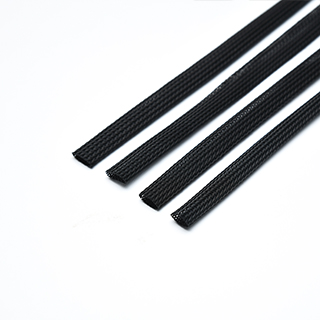
A braided cable sleeve is designed to protect wires and cables from abrasion, friction, and everyday wear. Made from woven materials such as PET polyester, nylon, or other specialized fibers, it forms a flexible protective layer around cable bundles. Braided cable sleeves are commonly used in automotive systems, electronics, industrial equipment, and computer wiring.
1. What Is the Purpose of Braided Cable Sleeve?
The main purpose of a braided cable sleeve is to protect cables while keeping wiring organized. Its woven structure provides flexibility, allowing it to expand around cable bundles and fit different shapes.
Common benefits include:
Abrasion protection: Helps reduce damage caused by friction against surrounding components.
Cable management: Keeps multiple wires grouped together for a cleaner installation.
Heat and environmental protection: Specialized materials can provide resistance to certain temperatures, chemicals, or other environmental conditions.
Improved appearance: Creates a neat, professional finish for exposed wiring.
For example, automotive manufacturers may use braided cable sleeve to protect wiring harnesses routed near moving components, where repeated contact could wear down cable insulation.
2. Why Is Braided Cable Sleeve Used Instead of Regular Tubing?
Braided cable sleeve offers flexibility and, in many designs, expandability. Unlike rigid tubing, it can accommodate cable bundles of different sizes and follow curved routing paths.
For instance, a computer manufacturer may use PET braided sleeving to organize power and data cables inside a computer case. The sleeve helps keep wires together while allowing easier routing around internal components.
However, standard PET Sleeving is not automatically suitable for high-temperature or heavy-duty applications. Material specifications should match the operating environment.
3. Does Braided Cable Sleeve Protect Against Heat?
The level of heat protection depends on the sleeve material and product construction. PET braided sleeves are commonly used for general cable organization and abrasion protection, while specialized fiberglass or other high-temperature sleeving may be required in hotter environments.
For example, wiring near an industrial heating element may require a sleeve with a verified high-temperature rating rather than standard polyester.
Before choosing a product, check its continuous operating temperature, short-term temperature rating, and compatibility with the cable insulation.
4. Where Is Braided Cable Sleeve Commonly Used?
Braided cable sleeve is used across several industries:
Automotive: Protecting wiring harnesses and organizing cables.
Electronics: Managing computer, appliance, and equipment wiring.
Industrial machinery: Reducing abrasion on cable bundles exposed to movement.
Home and office: Organizing power cords and data cables.
In an industrial control cabinet, for example, braided sleeving can group several signal wires into one organized bundle, making cable routing and maintenance easier.
Conclusion
Braided cable sleeve protects cables from abrasion, improves wire organization, and provides a flexible solution for managing cable bundles. The right product depends on the application, required flexibility, temperature exposure, and level of mechanical protection. Checking material specifications before installation helps ensure the sleeve meets the demands of its working environment.