




Braided cables are widely used for cable protection, wire organization, and abrasion resistance. However, they also have some disadvantages, including fraying, limited protection against liquids, and material-dependent temperature resistance. Understanding these limitations helps manufacturers and buyers choose the right braided cable sleeve for their applications.
1. What Are the Main Disadvantages of Braided Cable?
The main disadvantages depend on the sleeve material and construction. Common issues include:
Fraying edges: Cut ends may unravel unless properly finished or secured.
Limited liquid protection: Open-weave braided sleeves generally do not provide a waterproof barrier.
Variable heat resistance: Standard polyester sleeves may not suit high-temperature environments.
Installation challenges: Sleeves can snag on sharp edges or become difficult to fit over large connectors.
Limited impact protection: Flexible braided sleeves do not provide the same crush protection as rigid conduits.
For example, a PET Braided Cable Sleeve installed near sharp metal edges may experience wear over time if the cable bundle moves repeatedly against the surrounding structure.
2. Are Braided Cable Sleeves Waterproof?
Most standard Expandable Braided Cable Sleeves are not waterproof because their woven structure contains openings that allow water and other liquids to pass through.
For example, a braided sleeve used in an outdoor electrical installation may protect cables from abrasion but cannot, by itself, prevent water from reaching the cable insulation.
If moisture protection is required, consider a sealed conduit, a suitable waterproof cable jacket, or a purpose-designed protective sleeve with a verified ingress-protection rating.
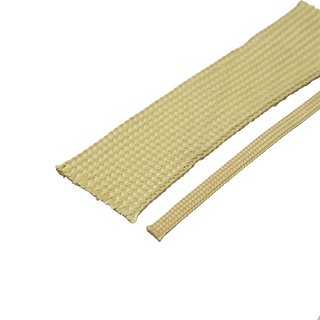
3. Can Braided Cable Sleeves Withstand High Temperatures?
Temperature resistance varies by material. PET braided sleeves are suitable for many general-purpose applications, but specialized materials may be necessary for environments exposed to intense heat.
For instance, wiring near an engine compartment or industrial heating equipment may require a sleeve rated for the actual operating temperature. Fiberglass or other high-temperature materials may be more appropriate, depending on the application.
Always check the manufacturer's continuous operating temperature and any short-term exposure limits before installation.
4. Do Braided Cable Sleeves Wear Out Easily?
Braided sleeves can wear out when exposed to continuous friction, sharp edges, chemicals, ultraviolet radiation, or temperatures beyond their rated limits.
A sleeve used to organize stationary computer cables may experience little mechanical stress. In contrast, a sleeve around a moving industrial cable may require greater abrasion resistance and regular inspection.
Selecting the correct weave density, material, and sleeve diameter can help reduce premature wear.
5. How Can You Reduce These Disadvantages?
To improve performance, select a braided cable sleeve based on the actual working conditions.
Choose abrasion-resistant materials for moving cables.
Use heat-rated sleeves in high-temperature environments.
Secure cut ends with suitable heat-shrink tubing or approved finishing methods.
Use sealed protection systems where waterproofing is necessary.
Inspect sleeves periodically for fraying, damage, and material deterioration.
For example, an automotive wiring harness may combine braided sleeving with grommets at panel openings to reduce abrasion where cables pass through metal surfaces.
Conclusion
Braided cable sleeves offer flexible cable protection, but they are not suitable for every environment. Fraying, limited waterproofing, temperature restrictions, and reduced crush resistance are important considerations. By matching the sleeve material and construction to the application, manufacturers can improve cable protection and service life.