



Sourcing custom heat shrink tubing means specifying six variables instead of picking a catalogue part number: expanded inside diameter, recovered inside diameter, wall thickness, material, colour, and cut length. A manufacturer that extrudes and expands its own tubing can build all six to your drawing, which is why the practical first step is not to compare stock lists but to send a dimensional drawing and let the factory confirm which values are achievable at your volume. The sections below set out what is genuinely customisable, what it costs in tooling and lead time, and how to vet a supplier before you place a production order.
What Can Be Customised in Heat Shrink Tubing
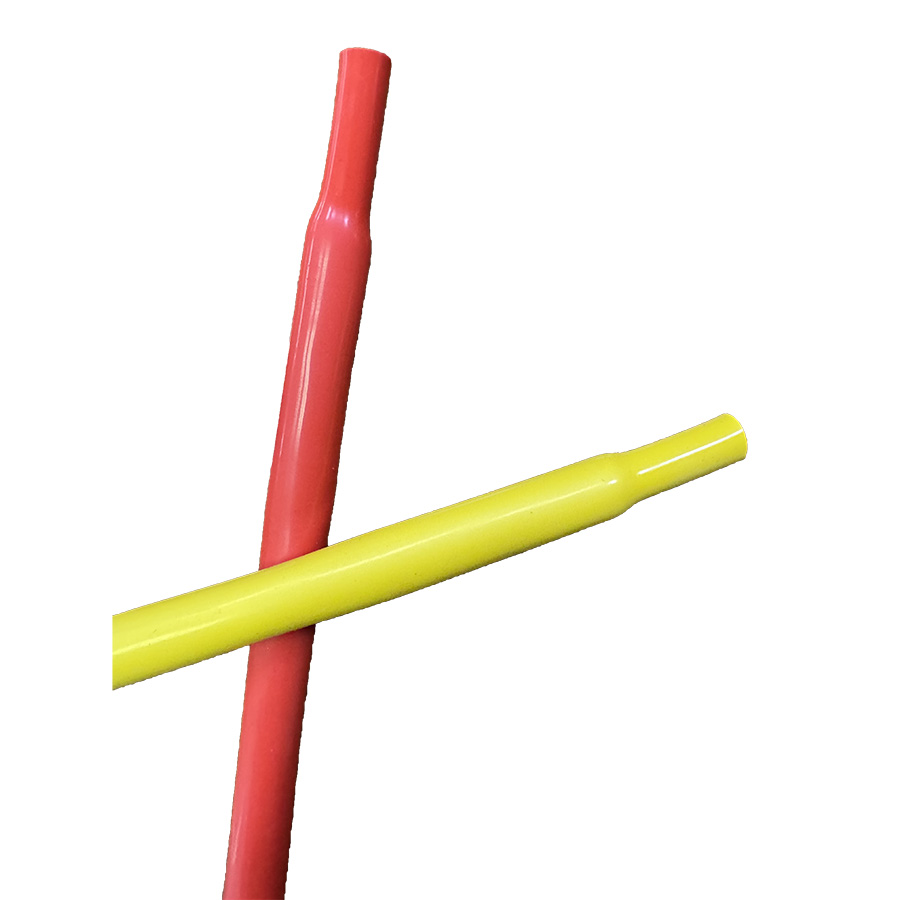
Most buyers assume custom heat shrink tubing — often written custom heatshrink — only means a non-standard diameter. In practice the customisable envelope is wider, and several of the items below are what actually determine whether the part works in production.
| Variable | What can be customised | Why buyers ask for it |
|---|---|---|
| Expanded ID | Any bore that clears your largest component | Standard sizes often force an oversized wall or a ratio you do not need |
| Recovered ID | Set to your required grip diameter | Controls hoop tension and prevents splitting on sharp edges |
| Wall thickness | Thin-wall through heavy-wall | Abrasion resistance and dielectric strength scale with wall |
| Material | Silicone, PTFE, FEP, PFA, PVDF and dual-wall constructions | Service temperature and chemical exposure decide the material, not the size |
| Colour | Transparent as standard; solid colours to order | Circuit identification and harness colour coding |
| Cut length | Continuous reels or pre-cut pieces | Pre-cut lengths remove a manual step from the assembly line |
Because colour and length are both open variables, custom heat shrink sleeves ordered in pre-cut lengths in a specific colour are one of the most common requests from harness shops — the tubing arrives ready to slide on instead of being measured and cut at the bench.
When Custom Sizes Are Worth the Tooling
Custom is not automatically the right answer. The decision usually comes down to annual volume and how badly the standard range fits.
Specify custom when
The nearest standard size leaves more than about 30% clearance on the component, or the recovered ID is so far below the substrate that the tube is under permanent stress. Custom is also justified when the standard wall is thicker than the routing space allows, or when a standard size exists only in a ratio that forces you to buy two part numbers where one would do.
Stay standard when
Your annual volume is low, the standard size already lands inside the recommended clearance band, and the application is not safety-critical. In that case a stock size from a supplier's shelf is faster and cheaper than a made-to-order run.
The middle route
Many projects do not need a new extrusion die at all — they need a standard bore cut to a custom length in a custom colour. Because cut length and colour do not require new tooling, this route usually carries the shortest lead time and the lowest minimum order of any custom option.
Choosing the Right Material for Your Specification
Material selection drives the achievable shrink ratio, the shrink temperature, and which certifications you can claim. Match the material to the harshest condition in the application — temperature, chemical exposure or mechanical abrasion — rather than to the average.
| Material | Strength | Best-fit applications |
|---|---|---|
| Silicone heat shrink tubing | -50 °C to 200 °C, flexible at low temperature, flame retardant | Wire and cable protection, engine compartments, general electrical insulation |
| FEP heat shrink tubing | High transparency, low outgassing, UV and weather resistant | Medical catheters, EV high-voltage cable, semiconductor and aerospace |
| PTFE heat shrink | -200 °C to +260 °C, chemical inertness, lowest friction | Aerospace and defence wiring, chemical processing, sterilised medical tooling |
| PFA heat shrink tubing | High-temperature continuous duty, stress-crack resistance | High-purity chemical lines, long-duration high-temperature service |
| PTFE/FEP dual wall heat shrink tubing | Melt-flow inner liner seals irregular shapes and voids | Moisture-proof splices, connector backshells, sealed terminations |
A heat shrinkable tubing manufacturer working in fluoropolymers will normally stock FEP, PFA and PTFE grades because the three cover different parts of the temperature and chemical spectrum. If your application sits between two materials, specify the higher-performing one and confirm the shrink temperature is still safe for the component underneath.
Certifications and Compliance to Specify
Compliance is where cheap quotations quietly differ from qualified ones. Rather than asking a supplier whether they are "certified", ask for the specific claim that applies to your market, and ask for it in writing against the part number you are buying.
| Claim | What it covers | Ask for |
|---|---|---|
| RoHS | Restricted hazardous substances in electrical equipment | Declaration of conformity per part number |
| REACH | Substance registration and SVHC content in the EU | SVHC statement and current candidate list reference |
| FDA | Food and medical contact suitability of the compound | Material grade confirmation, not just a generic claim |
| UL / C-UL flame resistance | Flame propagation performance of the tubing | Test report referencing the VW-1 rating |
| ISO 9001 | Quality management system at the manufacturing site | Current certificate with scope and expiry date |
Silicone, PTFE, FEP and PFA Heat Shrink Tubing from a qualified factory will normally carry RoHS, REACH and FDA compliance, with the fluoropolymer grades also meeting the VW-1 flame resistance rating. Ask for the documents tied to your part number, because a company-level certificate does not by itself confirm the compound in the reel you receive.
MOQ, Lead Time and Tooling — What to Expect
Custom tubing economics are driven by whether a new extrusion die is needed. Understanding which of the three cases below applies to your enquiry tells you most of the answer on price and lead time before you ask.
Case 1 — Standard bore, custom cut length or colour
No new tooling. This is the fastest and most accessible custom option, and the one most harness shops should start with.
Case 2 — Standard bore, different wall thickness
Usually achievable on existing extrusion equipment with a setup change. Expect a modest minimum order and a moderate lead time, but no die cost.
Case 3 — New expanded diameter
Requires tooling for the extrusion and expansion step. This is where minimum order quantity and lead time rise, and where annual volume becomes the deciding factor. Send your projected annual usage with the drawing so the supplier can judge whether the tooling is justified.
How to Vet a Heat Shrink Tubing Supplier
Not all heat shrink suppliers are manufacturers, and most sourcing problems trace back to the ones that are not. Heat shrink manufacturers that extrude and expand in-house control the two dimensions that matter, and these five questions separate them from the rest.
| Question | Good answer looks like |
|---|---|
| Do you extrude and expand in-house? | Yes, with the extrusion and expansion steps under one roof — this is what allows wall thickness and recovered ID to be controlled together |
| Can you supply the recovered ID test data for my lot? | Dimensional report per batch, not a generic catalogue figure |
| What is your actual capability range? | A stated bore range and wall range, so you know whether your drawing is inside or outside it |
| Which certifications apply to this part number? | Part-specific declarations for RoHS, REACH, FDA and flame rating |
| Can you send pre-production samples? | Samples from the same process, with the dimensions you specified marked on the report |
Technical Pre-Inquiry Checklist
Sending these eight items with your first enquiry typically removes two or three rounds of questions and gets you a firm quotation faster:
| Item | Detail required |
|---|---|
| 1. Component drawing | Largest diameter the tubing passes over, smallest diameter it seals onto |
| 2. Expanded ID | Target bore with tolerance |
| 3. Recovered ID | Target bore after full recovery with tolerance |
| 4. Wall thickness | After recovery, with tolerance |
| 5. Material | Silicone, PTFE, FEP, PFA or dual wall |
| 6. Colour and cut length | Including whether pre-cut pieces are wanted |
| 7. Service conditions | Continuous temperature, peak temperature, chemical contact |
| 8. Annual volume | Pieces or metres per year, and first-order quantity |
Frequently Asked Questions
What is the minimum order for custom heat shrink tubing?
It depends on whether new tooling is required. Custom cut lengths and colours in a standard bore carry the lowest minimum. A new expanded diameter needs extrusion and expansion tooling, so the minimum rises and annual volume becomes the deciding factor. Send your projected usage with the drawing and the supplier can confirm which case applies.
Can custom shrink tubing be supplied in specific colours?
Yes. Transparent is the standard finish for silicone and Fluoropolymer Tubing, and solid colours are produced to order for circuit identification and harness colour coding. Colour has no effect on the achievable shrink ratio, so it can be specified freely alongside a custom bore.
Do you need a new die for a custom diameter?
Only for a new expanded diameter. Changing wall thickness on an existing bore usually requires a setup change rather than new tooling, and changing cut length or colour requires no tooling at all. This is why the cheapest custom route is usually a standard bore in a custom colour and length.
What is the difference between heat shrink sleeve manufacturers and tubing distributors?
Heat shrink sleeve manufacturers control extrusion, expansion and cut length, so they can hold a recovered-ID tolerance across a production lot and build non-standard walls. Heat shrink sleeve suppliers that only distribute resell stock sizes and cannot change the dimensional envelope. For custom work, dealing with the manufacturer removes a layer of uncertainty.
Are FEP Heat Shrink Tubing manufacturers able to make medical-grade parts?
FEP grades that meet FDA requirements are used in catheter delivery systems and surgical equipment, and the material's low outgassing also suits vacuum and aerospace use. Confirm that the FDA claim applies to the specific compound supplied, and that the recovered dimensions meet the tolerance your device documentation requires.
How long does a custom production run take?
Standard bore with custom cut length or colour is the shortest route. A different wall thickness adds a setup stage. A new expanded diameter adds tooling and sampling before production. Because the spread between the three cases is large, always ask for the lead time against the specific case your drawing falls into rather than accepting a single blanket figure.
If you send the eight-item checklist above, our engineering team can tell you within one round which case your requirement falls into, what the achievable tolerance is, and what the tooling position is. Custom sizes and specifications beyond our published range are made to order — email the drawing and annual volume to intlsales@cngdg.com, or use our enquiry form and we will return a quotation with the recovered-ID tolerance stated.