




Why Engineers Choose PTFE Heat Shrink Tubing for Extreme Environments
Not all heat shrink tubing is designed for high-temperature and chemically aggressive environments. While polyolefin tubing performs well in general electrical protection, PTFE Heat Shrink Tubing is specifically engineered for applications where conventional insulation materials fail.
Manufactured from high-purity polytetrafluoroethylene (PTFE), this tubing combines exceptional thermal stability, chemical inertness, dielectric strength, and low-friction surface properties into a single protection solution. It is widely specified for aerospace wiring systems, semiconductor equipment, medical instruments, laboratory devices, and EV high-voltage harnesses.
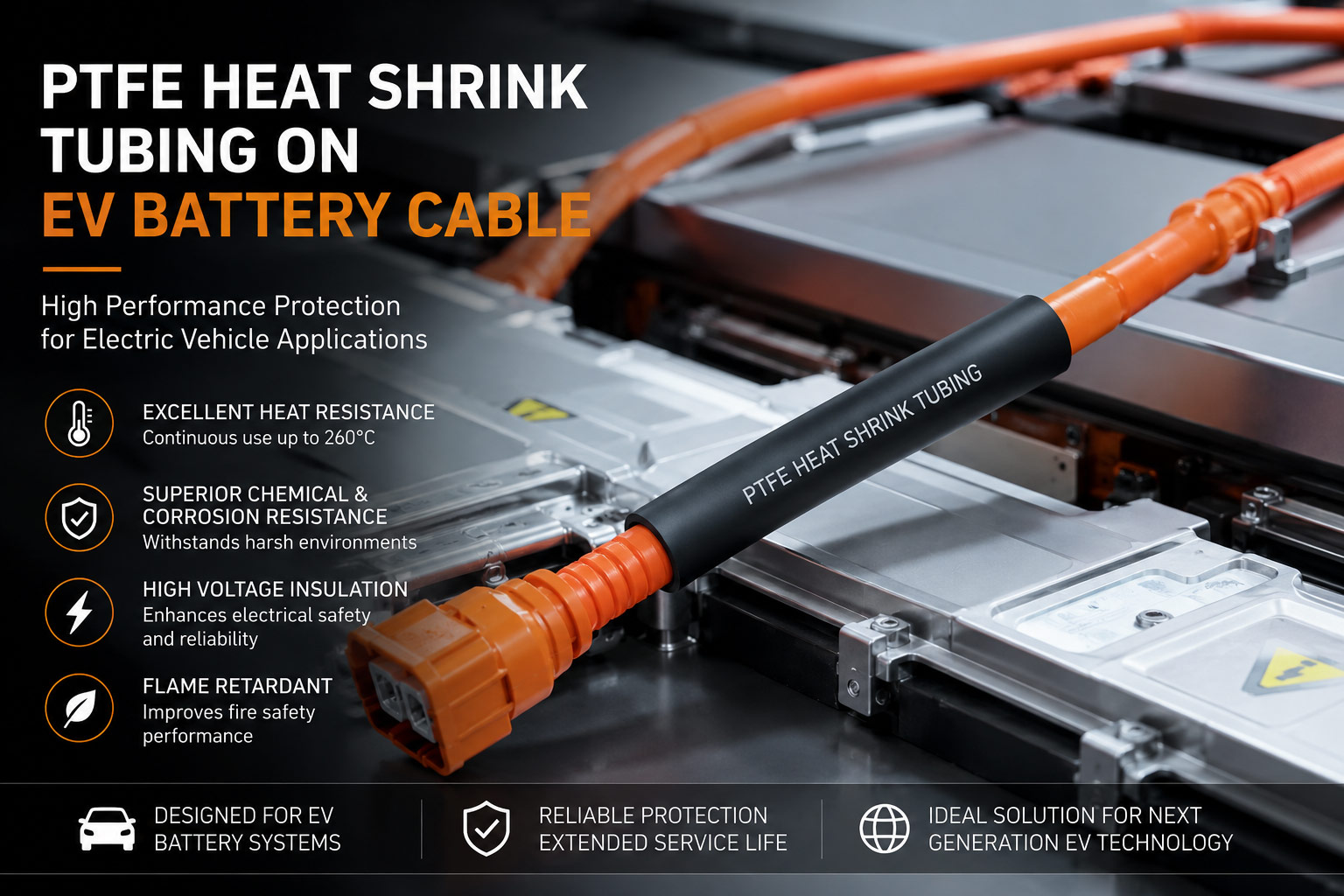
Performance Comparison: PTFE vs Standard Heat Shrink Tubing
| Property | PTFE Heat Shrink Tubing | Standard Polyolefin |
|---|---|---|
| Continuous Operating Temperature | 260°C | 125°C |
| Chemical Resistance | Excellent | Moderate |
| Surface Friction | Ultra-Low | Medium |
| Dielectric Strength | Very High | Standard |
| UV Resistance | Excellent | Good |
| Service Life | Long-Term Industrial Grade | General Purpose |
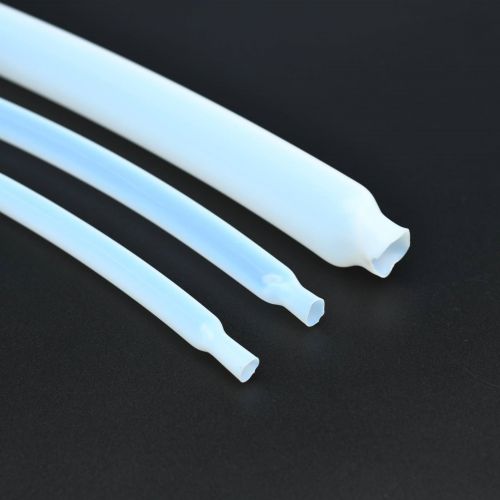
Where PTFE Heat Shrink Makes the Biggest Difference
EV Battery Systems
High-voltage cables inside electric vehicles are exposed to thermal cycling, vibration, and chemical contaminants. PTFE heat shrink tubing provides insulation stability while protecting conductor surfaces from abrasion and dielectric breakdown.
Semiconductor Manufacturing
Cleanroom equipment requires ultra-pure materials with minimal particle generation. PTFE tubing offers exceptional purity and chemical resistance, making it suitable for wafer fabrication and chemical delivery systems.
Aerospace Wiring Harnesses
Aircraft and satellite electrical systems demand lightweight insulation materials capable of maintaining performance under extreme temperatures and harsh environmental conditions.
Typical Engineering Problems Solved by PTFE Heat Shrink Tubing
| Challenge | Engineering Solution |
|---|---|
| Wire insulation cracking at high temperature | PTFE maintains mechanical stability up to 260°C |
| Chemical attack from solvents or acids | Fluoropolymer structure resists aggressive chemicals |
| Cable wear caused by movement | Low-friction surface reduces abrasion |
| Electrical leakage in compact systems | High dielectric strength improves insulation reliability |
| Outdoor UV degradation | Outstanding weather and UV resistance |
Selection Recommendations
Selecting the correct PTFE heat shrink tubing depends on the operating temperature, chemical exposure level, shrink ratio requirements, and installation space available. For high-voltage electrical protection, engineers generally prioritize dielectric performance and wall thickness. For fluid handling or medical applications, purity and chemical compatibility become the primary considerations.
Custom dimensions, wall thicknesses, colors, and shrink ratios are available for project-specific requirements.
Frequently Asked Questions
Why choose PTFE instead of polyolefin heat shrink tubing?
PTFE offers significantly higher temperature resistance, chemical resistance, and dielectric performance for demanding industrial applications.
Can PTFE heat shrink tubing be used in EV battery systems?
Yes. PTFE is widely used for insulation and protection of high-voltage cables in electric vehicle battery packs and charging systems.
Is PTFE tubing resistant to acids and solvents?
PTFE demonstrates excellent resistance to most industrial chemicals, acids, alkalis, and solvents.
Does PTFE heat shrink tubing provide electrical insulation?
Yes. PTFE possesses excellent dielectric properties and is commonly used in high-frequency and high-voltage electrical systems.
Can custom sizes be manufactured?
Custom diameters, wall thicknesses, shrink ratios, and lengths can be produced according to application requirements.