




PTFE Tubing Explained: Material Properties, Manufacturing Process and Industrial Applications
As industries continue to demand superior chemical resistance, extreme temperature tolerance, and long-term reliability, PTFE Tubing has become one of the most widely used Fluoropolymer Tubing solutions worldwide. From semiconductor manufacturing and medical devices to aerospace and chemical processing systems, PTFE tubing delivers performance that conventional plastic tubing cannot achieve.
What Is PTFE Tubing?
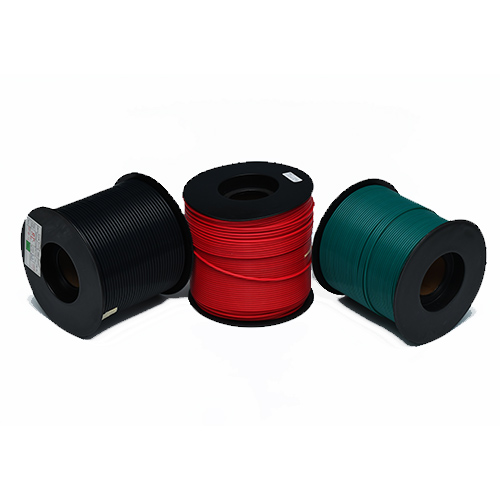
PTFE Tubing is manufactured from Polytetrafluoroethylene, a high-performance fluoropolymer first developed to withstand aggressive chemicals and extreme operating conditions. The material is chemically inert, non-stick, highly durable, and capable of maintaining mechanical stability across a broad temperature range.
Unlike standard PVC, PE, or nylon tubing, PTFE tubing offers exceptional resistance to corrosion, oxidation, and ultraviolet degradation. These properties make it particularly suitable for critical fluid transfer applications where contamination or material failure is unacceptable.
Continuous service temperature up to 260°C (500°F)
Outstanding chemical resistance
Ultra-low coefficient of friction
Excellent dielectric strength
Non-stick surface properties
FDA and medical-grade options available
Long operational lifespan
Core Material Properties of PTFE
Exceptional Chemical Resistance
One of the primary reasons PTFE tubing dominates industrial applications is its ability to resist nearly all industrial chemicals. Strong acids, alkalis, solvents, and oxidizing agents generally have little effect on PTFE.
This chemical inertness significantly reduces maintenance requirements and prevents contamination during fluid transportation processes.
Extreme Temperature Performance
PTFE tubing can operate continuously between -200°C and +260°C. Unlike many thermoplastics, PTFE does not become brittle under cryogenic conditions and maintains structural integrity at elevated temperatures.
This unique property allows PTFE tubing to be utilized in both high-temperature processing lines and low-temperature laboratory systems.
Low Friction Surface
PTFE possesses one of the lowest coefficients of friction among engineering materials. Fluids move smoothly through the tubing while reducing pressure loss and minimizing particle accumulation on internal surfaces.
Superior Electrical Insulation
The outstanding dielectric properties of PTFE make it a preferred insulation material for electronic systems, aerospace wiring, communication equipment, and high-frequency applications.
How PTFE Tubing Is Manufactured
The manufacturing process of PTFE tubing differs significantly from conventional thermoplastic extrusion methods.
Paste Extrusion Process
PTFE fine powder is mixed with a lubricant to form a paste-like compound. The material is then compressed and extruded through precision dies to achieve the desired tube dimensions.
Sintering
Following extrusion, the tubing undergoes a carefully controlled sintering process. During this stage, the lubricant evaporates while PTFE particles fuse together to create a dense, homogeneous structure.
Dimensional Inspection
Each batch undergoes strict quality inspections to verify wall thickness, inner diameter tolerance, concentricity, and surface quality.
PTFE vs FEP vs PFA Tubing
When selecting fluoropolymer tubing, engineers often compare PTFE, FEP, and PFA materials.
| Property | PTFE | FEP | PFA |
|---|---|---|---|
| Maximum Temperature | 260°C | 200°C | 260°C |
| Chemical Resistance | Excellent | Excellent | Excellent |
| Transparency | Opaque | Transparent | Transparent |
| Flexibility | Good | Very Good | Excellent |
| Cost | Moderate | Lower | Higher |
For applications requiring transparency, users may choose FEP Tubing or PFA tubing. However, PTFE remains the industry benchmark for overall performance and durability.
Industrial Applications of PTFE Tubing
Chemical Processing Industry
Chemical plants rely heavily on PTFE tubing to transport aggressive media safely. Its resistance to corrosion helps reduce downtime while extending equipment lifespan.
Medical Device Manufacturing
Medical-grade PTFE tubing is used in catheters, surgical instruments, drug delivery systems, and laboratory equipment due to its biocompatibility and cleanliness.
Semiconductor Manufacturing
Semiconductor production environments require ultra-pure fluid transfer systems. PTFE tubing minimizes contamination risks while resisting aggressive process chemicals.
Automotive Industry
Fuel systems, brake systems, and emission control equipment frequently incorporate PTFE tubing because of its temperature stability and chemical compatibility.
Aerospace Applications
Aircraft hydraulic systems, fuel delivery assemblies, and electrical insulation systems often utilize PTFE tubing to ensure reliability under demanding environmental conditions.
How to Choose the Right PTFE Tubing Supplier
Selecting a qualified PTFE Tubing Supplier involves evaluating several important factors:
Manufacturing capability
Dimensional tolerance control
Material certifications
Custom extrusion capabilities
Quality management systems
Industry experience
Working with an experienced PTFE Tubing Supplier ensures consistent product quality and reliable technical support.
Future Trends of Fluoropolymer Tubing
With the rapid growth of electric vehicles, semiconductor fabrication, renewable energy systems, and advanced medical technologies, demand for high-performance fluoropolymer tubing continues to increase.
PTFE tubing remains at the forefront of these developments because of its unique balance of thermal resistance, chemical stability, and long-term reliability.
Frequently Asked Questions
What temperature can PTFE tubing withstand?
PTFE tubing typically operates continuously from -200°C to +260°C.
Is PTFE tubing chemically resistant?
Yes. PTFE is resistant to nearly all industrial chemicals, including acids, alkalis, and solvents.
Can PTFE tubing be customized?
Yes. PTFE tubing can be manufactured with custom diameters, wall thicknesses, lengths, and colors to meet specific application requirements.
What industries use PTFE tubing?
Chemical processing, medical devices, semiconductor manufacturing, aerospace, automotive, electronics, and food processing industries all utilize PTFE tubing extensively.