




How to Choose the Right Braided Cable Sleeve Material for Different Industries
Choosing the right braided cable sleeve is not simply a matter of selecting the correct diameter. Different industries expose cables to different levels of heat, abrasion, vibration, chemicals, movement, and mechanical stress. The material and construction of the sleeve therefore need to match the actual working environment.
PET, nylon, fiberglass, heat-shrink braided materials, and Kevlar all provide different levels of protection. Understanding these differences can help engineers, cable assembly manufacturers, and distributors select the right braided sleeving for each application.
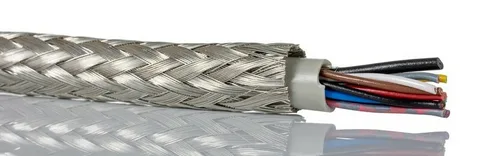
PET Braided Sleeving for General Cable Protection
PET is one of the most widely used materials for Expandable Braided Cable Sleeves. It provides a good balance between flexibility, abrasion resistance, lightweight construction, and cost.
For general industrial equipment, electronics, control cabinets, automotive wiring harnesses, and data cables, PET Expandable Braided Sleeving is often a practical choice.
The expandable structure allows the sleeve to accommodate different cable bundle diameters while maintaining flexibility. PET braided sleeving is particularly suitable when the primary requirements are cable organization, abrasion protection, and easy installation. Gendian's PET expandable sleeving is designed for cables, wires, hoses, and sensitive components and uses a woven structure for flexible coverage.
Typical applications include:
Automotive wiring harnesses
Industrial automation
Electronic equipment
Computer and communication cables
Control panels
General cable management
For many standard cable protection applications, PET provides a good starting point before moving to more specialized materials.
PA+PET Hybrid Sleeving for Flexible and Dynamic Applications
Some cable assemblies require more than basic abrasion protection. When cables experience frequent bending, movement, or vibration, a hybrid material can provide a useful balance between flexibility and mechanical durability.
PA+PET Hybrid Expandable Braided Sleeving can be considered for applications where the cable assembly needs to remain flexible while being protected from external wear.
This type of construction can be particularly useful in industrial automation, machinery, robotics, and moving cable assemblies where the wiring does not remain stationary.
When selecting a sleeve for dynamic applications, engineers should also consider the cable's minimum bending radius and the amount of repeated movement expected during normal operation.
Fiberglass Sleeving for High-Temperature Applications
Temperature is one of the most important factors when selecting a cable protection material. Standard PET or polyester sleeving may be suitable for many general applications, but higher-temperature environments require specialized materials.
Fiberglass High Temperature Sleeving is designed for applications where heat resistance and thermal protection are important.
Typical applications include:
Motors and generators
Industrial heating equipment
Automotive engine compartments
Electrical equipment
High-temperature machinery
Power and energy systems
Fiberglass-based protection is particularly useful when cables are routed close to heat sources. However, the actual continuous operating temperature, peak temperature, surrounding components, and required insulation performance should always be evaluated before selecting a sleeve.
Fabric Heat Shrink Braided Sleeving for Secure Cable Bundles
For applications where the protective covering needs to conform closely to the cable bundle, a heat-shrink braided sleeve can be a better option.
Fabric Heat Shrink Braided Sleeving combines a braided textile structure with heat-shrink capability. According to Gendian's product specifications, the sleeve has a 2:1 shrink ratio and is designed for applications including automotive wiring harnesses, electronics, telecommunications, aerospace, and industrial machinery.
The main advantage is that the sleeve can conform more closely to the cable bundle after heating. This can help create a cleaner installation and reduce loose material around the wiring.
This type of braided cable sheath can be particularly useful when the cable assembly has irregular shapes or when a secure, finished appearance is required.
Kevlar Braided Sleeving for Demanding Environments
Some applications require a much higher level of mechanical protection than standard cable management systems.
Kevlar Braided Sleeving is designed for demanding environments where high tensile strength, abrasion resistance, cut resistance, and thermal stability are important. Gendian lists aerospace, automotive, and high-tech applications among its target uses.
Kevlar sleeving can be considered for applications involving:
Severe abrasion
High mechanical stress
High-performance automotive systems
Aerospace equipment
Specialized industrial machinery
High-tech equipment
It is generally unnecessary to use a high-performance material when a standard PET sleeve already meets the application requirements. The material should be selected according to the actual operating conditions and required protection level.
Which Braided Cable Sleeve Is Suitable for Different Industries?
The easiest way to select a sleeve is to start with the industry's primary operating conditions.
Automotive: PET, PA+PET hybrid, heat-shrink braided sleeving, fiberglass, or specialized high-temperature materials can be selected according to location. Engine compartments may require greater thermal protection, while general wiring harnesses may primarily require abrasion and vibration resistance.
Industrial Automation: PET and PA+PET braided sleeving are suitable for many standard machinery and automation applications. Where cables move repeatedly, flexibility and abrasion resistance become more important.
Robotics: Dynamic cable assemblies require flexible protection that can accommodate repeated bending and movement. Hybrid braided materials or specialized high-flexibility sleeving may be more appropriate than rigid conduit.
Electronics and Communication: PET braided sleeving is commonly suitable when the main requirements are cable organization, abrasion protection, and a clean installation.
High-Temperature Equipment: Fiberglass and other heat-resistant braided materials should be considered when cables are installed near significant heat sources.
Aerospace and High-Performance Equipment: Lightweight construction, mechanical strength, temperature resistance, and reliability may all be important. Depending on the application, specialized materials such as Kevlar can be considered.
Don't Choose a Sleeve by Material Alone
Material is important, but it should not be the only selection criterion.
Before choosing a braided cable sleeve, engineers should also check the cable bundle diameter, expansion range, operating temperature, bending requirements, abrasion level, chemical exposure, UV exposure, flame-retardant requirements, and installation method.
For example, a PET sleeve may be an excellent choice for a standard electronic cable but may not be the best solution for a cable routed close to an engine or heating element. Similarly, a high-temperature sleeve may provide unnecessary cost and performance if the cable operates in a normal indoor environment.
The goal is not to choose the most expensive material. It is to choose the material that provides the required protection while maintaining flexibility, installation efficiency, and cost control.
How to Match Material with Application
A simple selection process can be used:
General cable management → PET braided sleeving
Frequent movement and bending → PA+PET hybrid braided sleeving
High-temperature environment → Fiberglass high-temperature sleeving
Close-fitting cable protection → Fabric heat-shrink braided sleeving
Extreme mechanical stress → Kevlar braided sleeving
This approach makes it easier for OEMs, distributors, and cable assembly manufacturers to narrow down the appropriate product before confirming detailed specifications.
For installation guidance, our article How to Use Braided Cable Sleeve explains how braided cable protection can be selected and installed for different cable assemblies. You can also refer to How to Cut and Install Braided Cable Sleeve for additional installation considerations.
Conclusion
The right braided sleeving depends on the environment in which the cable will operate. PET is a practical choice for general cable protection, PA+PET hybrid materials can provide flexibility for dynamic applications, fiberglass is suitable for high-temperature environments, heat-shrink braided sleeves provide closer-fitting protection, and Kevlar is designed for more demanding mechanical conditions.
By matching the sleeve material with the industry's actual requirements, manufacturers can improve cable protection without unnecessarily increasing material or installation costs. For custom cable protection solutions, it is also important to consider diameter, temperature, flexibility, flame resistance, abrasion, and environmental exposure together rather than selecting a product based on a single specification.