




Cable assemblies are increasingly used in automotive systems, industrial equipment, electronic devices, robotics, and automated machinery. As wiring becomes more complex, effective cable protection and wire management are essential for maintaining reliability and extending service life. A braided cable sleeve provides a flexible way to organize cable bundles while protecting wires from abrasion, friction, and everyday mechanical stress.
Unlike rigid cable conduits, braided sleeving is designed to remain flexible. Its woven construction allows the sleeve to expand around cable bundles and conform to different shapes, making it suitable for applications where cables need to bend, move, or pass through narrow spaces.
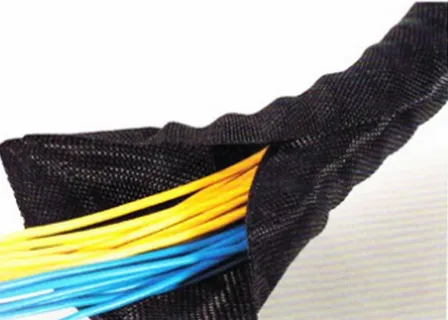
What Is a Braided Cable Sleeve?
A braided cable sleeve is a flexible protective covering made by weaving multiple strands of material into a tubular structure. Common materials include PET, polyester, nylon, and fiberglass, with each material offering different performance characteristics.
The open braided structure is one of its key advantages. Depending on the design, the sleeve can expand to accommodate several cables of different sizes while still maintaining a relatively compact profile.
For general cable management, PET braided sleeving is widely used because it offers a balance of flexibility, abrasion resistance, and cost efficiency. When cables operate in higher-temperature environments, specialized fiberglass braided sleeves may be more appropriate.
Why Use Braided Sleeving for Cable Protection?
Cable protection is not only about preventing physical damage. A well-designed cable management system can also improve installation efficiency, reduce maintenance problems, and create a more organized wiring layout.
Braided sleeving can help protect cable bundles against repeated rubbing and mechanical contact. This is particularly valuable when wiring passes through machinery, equipment housings, cable channels, or moving assemblies.
Its flexibility is another important advantage. Cables inside industrial equipment may need to bend repeatedly during operation. A rigid protective tube can restrict movement, while braided sleeving can follow the movement of the cable bundle more naturally.
The sleeve can also consolidate multiple individual wires into one organized bundle, reducing cable clutter and making routing easier.
Braided Cable Sleeve vs. Braided Cable Sheath
The terms braided cable sleeve and braided cable sheath are sometimes used interchangeably, although the actual product design can vary.
A braided cable sleeve generally emphasizes flexibility, expansion, and convenient cable management. It is commonly installed over a group of wires or cables to provide mechanical protection and organization.
A braided cable sheath can refer more broadly to a braided outer protective layer surrounding a cable or harness. Depending on the application, it may be designed specifically for abrasion resistance, heat resistance, electrical insulation, or mechanical protection.
When selecting a product, it is therefore more important to evaluate the actual material, diameter range, temperature rating, abrasion resistance, and installation requirements than simply relying on the product name.
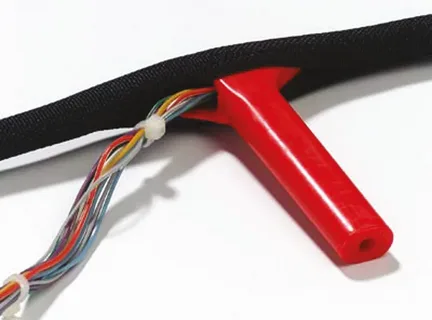
How to Choose the Right Braided Cable Sleeve
Selecting the correct sleeve starts with understanding the cable bundle.
The first consideration is the bundle diameter. Measure the outside diameter of the complete cable assembly rather than an individual wire. An expandable sleeve should provide enough room for the cables to fit comfortably without excessive compression.
The second consideration is the operating environment. For standard indoor applications, PET or Polyester Sleeving can provide effective protection. For demanding industrial environments, the sleeve may need higher abrasion resistance or greater temperature resistance.
The third factor is movement. If the cable assembly is frequently bent or moved, flexibility and expansion capability become particularly important. Robotic arms, automated equipment, and vehicle wiring systems may require a sleeve that can accommodate repeated movement without becoming excessively rigid.
Finally, consider the installation method. Conventional expandable sleeving works well when cables can be disconnected or installed before connectors are attached. Split or side-entry designs can be more convenient for existing cable assemblies.
Common Applications
Braided cable sleeves are used across numerous industries.
In automotive applications, they can be used to organize and protect wiring harnesses exposed to vibration and mechanical friction. In industrial automation, braided sleeves help manage cables around motors, sensors, control cabinets, and moving machinery.
In robotics, flexible braided protection can allow cable bundles to move while reducing direct contact with surrounding components. In electronic equipment, braided sleeving can provide a cleaner cable layout while adding an additional layer of mechanical protection.
For more information about practical installation and the different considerations when working with braided cable protection, see this related guide: How to Use Braided Cable Sleeve.
Installation Tips for Braided Sleeving
Correct installation is important if the sleeve is expected to provide long-term protection.
Before installation, determine the required sleeve length and select a diameter that can accommodate the entire cable bundle. When cutting braided material, the edges should be properly secured to reduce fraying.
During installation, avoid excessive stretching. The sleeve should remain flexible enough to accommodate cable movement while maintaining sufficient coverage around the wiring.
The ends can be secured with cable ties, clamps, heat-shrink tubing, or other suitable fastening methods depending on the application. For equipment that requires regular maintenance, removable fastening methods may provide easier access to the cable bundle.
Conclusion
A braided cable sleeve is a practical solution for combining cable protection with flexible wire management. Its woven structure provides useful abrasion resistance while allowing cable bundles to bend and move more freely than many rigid protection systems.
For engineers, cable assembly manufacturers, distributors, and industrial equipment designers, the best solution depends on cable diameter, material, temperature, mechanical stress, movement, and installation conditions.
By selecting the appropriate braided sleeving or braided cable sheath, manufacturers can improve cable organization, reduce mechanical wear, and create more reliable wiring systems for demanding applications.