




In modern manufacturing, tubing plays an essential role across industries — from medical devices to automotive wiring, from electronics protection to fluid transfer systems. Among the most versatile types of tubing is the extruded tube, known for its precision, consistency, and adaptability.
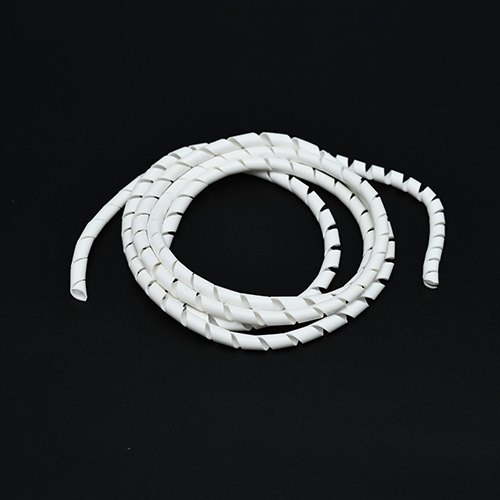
One remarkable example of this technology in action is the Silicone Spiral Cable Wrap — a flexible, durable, and heat-resistant product made using advanced extruded silicone tubing technology. This article explores what an extruded tube is, how it’s made, and why silicone extrusion has become a leading solution for protective cable management systems.
1. Understanding What an Extruded Tube Is
An extruded tube is a continuous length of hollow material — typically metal, plastic, or silicone — formed through a manufacturing process called extrusion. In this process, raw material is heated and forced through a specially designed die, shaping it into a consistent tubular profile.
The result is a product with uniform wall thickness, excellent dimensional accuracy, and smooth surfaces — ideal for applications that require precision and durability.
Extruded tubes can be produced in various diameters, lengths, colors, and materials, including aluminum, PVC, polyethylene, and silicone. Among these, extruded silicone tubing is highly valued for its flexibility, temperature resistance, and insulation properties, making it perfect for protective cable wraps, medical devices, and high-performance sealing solutions.
2. The Role of Extruded Silicone Tubing in Cable Protection
Silicone is a synthetic polymer known for its elasticity, chemical stability, and thermal endurance. When processed into extruded silicone tubing, it becomes an exceptional material for insulating and protecting cables in demanding environments.
The Silicone Spiral Cable Wrap, for instance, is manufactured by extruding silicone material into a thin, flexible tube and then shaping it into a spiral configuration. This allows it to be easily wrapped around multiple wires or cables, organizing them neatly while protecting them from abrasion, heat, and mechanical wear.
Key Functions of Silicone Spiral Cable Wrap
Cable Management: Keeps wires neatly bundled, reducing clutter and improving safety.
Protection: Shields cables from cuts, chemicals, and external impact.
Flexibility: Allows cables to bend and move without restriction.
Reusability: Can be installed and removed multiple times without deformation.
Temperature Resistance: Performs reliably in both high and low temperatures, thanks to the thermal stability of silicone.
The combination of these properties makes extruded silicone tubing products like spiral wraps indispensable in industries such as electronics, robotics, aerospace, and automotive manufacturing.
3. The Extrusion Process: How Extruded Tubes Are Made
The extrusion process for creating silicone tubes and spiral wraps involves several carefully controlled steps that ensure consistent quality and precise dimensions. Let’s take a closer look:
Step 1: Material Preparation
The process begins with high-purity silicone rubber compounds. These may include additives to enhance specific properties — for example, flame resistance, color stability, or medical-grade purity.
The raw silicone is mixed to achieve uniform consistency and is then prepared for extrusion through a feeding system.
Step 2: Extrusion Through a Die
The silicone compound is fed into an extrusion machine, where it is heated and forced through a custom-designed die that determines the tube’s inner and outer diameter.
This stage produces a continuous length of extruded silicone tubing with precise geometry. In the case of the Silicone Spiral Cable Wrap, the tubing may be partially shaped into a spiral configuration immediately after extrusion or through a secondary forming process.
Step 3: Curing and Vulcanization
After the silicone is extruded, it must be cured to strengthen its molecular structure. This curing process typically occurs in a high-temperature oven or through hot-air vulcanization.
Curing ensures that the tubing maintains its shape, elasticity, and thermal resistance even under challenging conditions.
Step 4: Cooling and Cutting
The extruded tube is cooled in a controlled environment to prevent deformation. Once cooled, it is cut into specified lengths or prepared for additional forming — such as twisting into a spiral wrap.
Step 5: Finishing and Inspection
Before packaging, each piece undergoes strict quality inspection. Manufacturers check for wall thickness uniformity, surface smoothness, and dimensional precision.
Some Silicone Spiral Cable Wraps may also receive post-processing, such as printing, color-coding, or surface treatment, to meet industry-specific requirements.
4. Why Silicone Is Ideal for Extruded Tubing
Silicone’s physical and chemical properties make it one of the best materials for tubing applications. Here are some of the major reasons extruded silicone tubing is used in high-performance cable protection products like Silicone Spiral Cable Wraps:
1. Heat Resistance
Silicone can withstand continuous exposure to temperatures ranging from -60°C to +250°C, making it suitable for environments with extreme heat or cold.
2. Chemical Stability
It resists damage from oils, solvents, and many chemicals, maintaining performance even in harsh industrial conditions.
3. Flexibility and Elasticity
Silicone maintains excellent flexibility, even at low temperatures, allowing it to wrap around cables and components without cracking or stiffening.
4. Electrical Insulation
It provides superior dielectric strength, making extruded silicone tubing ideal for protecting electrical wires and assemblies from short circuits and interference.
5. Aging Resistance
Silicone does not degrade under UV light or ozone exposure, ensuring a long lifespan for outdoor and industrial applications.
6. Biocompatibility
In its purest grades, silicone is biocompatible, making it safe for medical and food-related tubing applications.
5. Advantages of Silicone Spiral Cable Wrap Made from Extruded Tubing
The Silicone Spiral Cable Wrap is a prime example of how extruded silicone tubing technology translates into practical, everyday benefits. Let’s explore its key advantages:
(1) Excellent Flexibility and Elastic Memory
The spiral design allows the wrap to stretch and retract easily, accommodating bundles of various sizes while maintaining a snug fit.
(2) Enhanced Cable Protection
It prevents cables from rubbing against sharp edges, which can cause wear and electrical hazards over time.
(3) Easy Installation and Reuse
Users can apply the wrap by hand — no special tools needed. It can also be removed and reused multiple times without losing elasticity.
(4) Aesthetic and Functional Organization
Besides protection, spiral wraps keep wiring systems neat and professional, ideal for data centers, machinery panels, and home electronics.
(5) High Durability
Thanks to its extruded silicone tubing construction, the product offers exceptional durability and resistance to environmental stress.
6. Industrial Applications of Extruded Silicone Tubing and Spiral Wraps
The versatility of extruded silicone tubing extends to multiple industries, where the Silicone Spiral Cable Wrap provides reliable cable management and insulation.
Some of the most common application areas include:
Electronics and Robotics: Organizing complex wiring harnesses in control panels and automation systems.
Aerospace and Defense: Protecting electrical lines from vibration and thermal stress in aircraft or military equipment.
Automotive Industry: Securing and insulating engine bay cables and sensors.
Telecommunications: Managing data cables in communication racks and cabinets.
Medical Equipment: Providing flexible, hygienic cable protection in laboratory or clinical environments.
Home and Office Use: Organizing computer, entertainment, and appliance cords for safety and aesthetics.
7. Quality Control in Extruded Tube Manufacturing
Since extruded silicone tubing is used in critical applications, maintaining consistent quality is essential. Leading manufacturers apply rigorous inspection and testing procedures at every production stage.
Common quality assurance steps include:
Dimensional accuracy tests (inner/outer diameter, wall thickness)
Tensile strength and elongation testing
Temperature resistance and aging tests
Dielectric and insulation performance testing
Visual inspection for air bubbles or surface defects
This commitment to quality ensures that every Silicone Spiral Cable Wrap performs reliably even under extreme operating conditions.
8. Customization Options for Extruded Silicone Tubing
Manufacturers can tailor extruded silicone tubing and spiral wraps to meet specific customer requirements.
Customization options include:
Diameter and wall thickness: To accommodate cables of different sizes.
Color selection: For visual identification or aesthetic matching.
Temperature rating: Adjusted based on specific working environments.
Flame-retardant or medical-grade compounds: For specialized applications.
Length and spiral pitch: Depending on the type of cable bundle and desired coverage.
Through precision extrusion and secondary forming, suppliers can deliver customized Silicone Spiral Cable Wraps that perfectly match the user’s technical and visual expectations.
9. Why Choose Extruded Silicone Tubing for Your Cable Wrap Needs
When comparing materials for cable protection, extruded silicone tubing consistently stands out for its combination of durability, flexibility, and insulation.
Here’s why it’s the preferred choice:
It offers a long lifespan, reducing maintenance and replacement costs.
It maintains performance in challenging thermal or chemical environments.
It provides an eco-friendly alternative to PVC and other plastics.
It supports a wide range of customization for diverse industrial requirements.
For manufacturers seeking to improve cable safety, organization, and appearance, Silicone Spiral Cable Wraps made from extruded silicone tubing deliver unmatched value and reliability.
10. Conclusion
The extruded tube is one of the most versatile and efficient forms of modern material processing — enabling the creation of high-precision, durable, and flexible products across industries. Among its many applications, the Silicone Spiral Cable Wrap showcases the superior performance of extruded silicone tubing, offering a perfect balance of flexibility, protection, and resilience.
From cable management in industrial automation to everyday electronics, this product represents the evolution of extrusion technology — where material science meets functional design.
Whether you’re an engineer seeking dependable cable protection or a manufacturer exploring advanced tubing solutions, investing in extruded silicone tubing products ensures performance, longevity, and safety in every application.